

A Wholesale Electrical Wire Supplier Answers Some Questions
11th Dec 2025
As a wholesale electrical wire supplier, we sell a wide range of different electrical wire and cable, many of our product offerings are highly specialized with unique ratings and specifications.
With that in mind, hopefully, this short guide will clear up any confusion there is about any of the major categories we represent.
1. What are some specialty types of electrical wire and cable and what are they used for?
The following are a few of the different types of specialty electrical wire and cable that we sell here:
- DLO cable: DLO cable, or diesel locomotive cable, is an extremely durable, tough electrical cable that’s used on diesel locomotive engines to transmit power from generators to motors. It’s also commonly used in mining, shipbuilding, and in other industrial applications.
- Submersible pump cable: Submersible pump cable is a special type of electrical cable that’s used to power underground and underwater pumps, hence the name.
- Armored cable: Armored cable is a special type of electrical cable that houses conductors under a common sheath, which is protected by another outer layer of interlocking metal armor, which affords a higher level of protection. It is commonly used in mining, agriculture, and in other industries.
- Tray cable: Tray cable is electrical cable that is rated for use in cable trays as opposed to conduit; tray cable is easier to lay and tray cable is easier to inspect than cable drawn through a conduit.
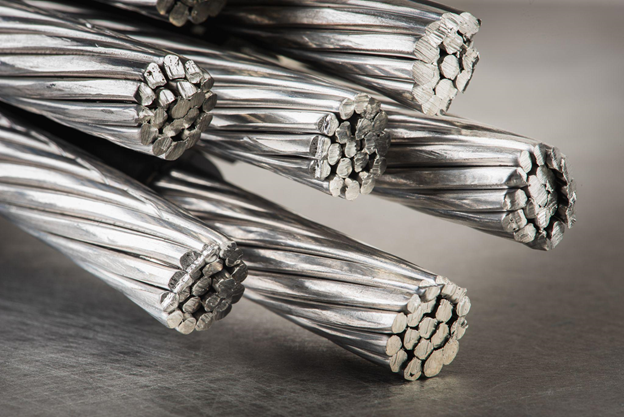
- Aluminum wire such as quadruplex wire: We also carry a wide range of aluminum wire and cable, such as quadruplex wire and triplex wire that are used for power service entry in buildings.
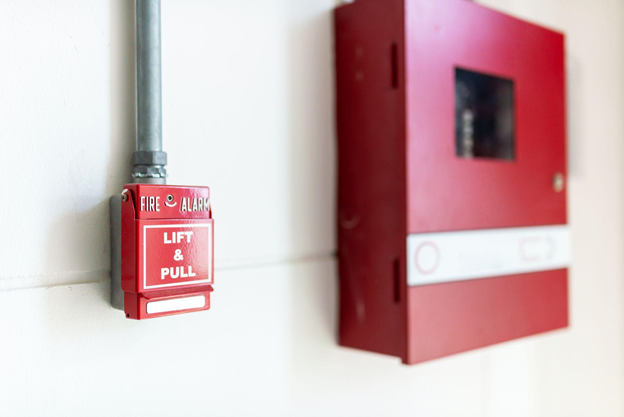
- Instrumentation and alarm cable: Instrumentation and alarm cable constitutes a broad but specialized class of electrical conductors that are used for power supply as well as communication across alarm and instrumentation circuits.
We sell some other types of electrical cable that will be explored in their own sections.
2. What qualifies welding cable?
Welding cable is a special type of electrical cable used to provide power for welding equipment. There are two main things that qualify welding cable; durability and flexibility. One, the cable must be thick so as to manage the current and voltage of the application. In order to keep it flexible, it is made with a high strand count and finely stranded conductors. It is also made with a physically durable insulation that protects it from abrasion, chemicals and more.
3. What about marine battery cable?
Marine battery cable is also qualified by two main attributes; it must be highly flexible and highly corrosion resistant. To accomplish this, marine battery cable, like flexible welding cable, must be made with a high strand count of highly flexible conductors. They are also individually tinned to protect them against corrosion.
4. What makes solar panel cable special?
Solar panel cable, which is commonly used to wire solar electrical systems, must also be qualified by special insulation that protects it against the weather as well as against sunlight. Specifically, the wire must be insulated with a material that is UV-resistant so that it will not break down prematurely, even in the presence of constant bright sunlight.
5. What are the most common types of electrical wire and cable insulation?
There are many different types of materials commonly used as insulation for electrical wire and cable. Among these are:
- PVC: PVC insulation is relatively affordable and offers reasonable resistance to high heat, flame, moisture and abrasion as well as to some chemicals.
- PUR: PUR, or polyurethane, offers extreme durability as well as high flexibility at cold temperatures. In addition it offers good resistance to moisture, chemicals and abrasion.
- PE: Although it is stiff and relatively inflexible, PE insulation is commonly used with low-voltage cables.
- PP: Polypropylene offers similar benefits to PE except it offers serviceability under a wider range of temperatures.
- XLPE: XLPE, or cross-linked polyethylene, offers greater durability and strength, as well as higher heat-resistance than standard PE insulation.
- EPDM: Ethylene propylene diene monomer is a common electrical insulation because it is highly resistant to chemicals, as well as to heat, weather, and abrasion. It also has excellent electrical properties.
- TPR: TPR, or thermoplastic rubber offers good flexibility and durability, as well as high resistance to heat, weather and aging.
6. What’s the difference between shielded and non-shielded fire alarm cable?
Some instrumentation and alarm cable is shielded, which protects it against EMI, or electromagnetic interference, which arises from both human and non-human sources, and which can scramble a signal. Non-shielded cable is not protected against EMI.
7. What about riser vs. plenum rated fire alarm cable?
Riser-rated cable is approved for use in riser space, which is the vertical space that communicates between the floors of a building. Plenum space is the space above a drop ceiling, or less commonly, the space below a raised floor, which is commonly used for ductwork and HVAC equipment. Cables are rated according to their appropriate installation.
8. What is bare copper wire used for?
Most commonly, bare copper wire is used as a ground, for safety reasons. It is not insulated because it is not intended to carry a current and only does so in the event of a surge or spike, to carry away excess current. Also, bare copper wire is easier to manufacture, making it most cost effective for use as a ground.
9. What do electrical wire colors mean?
Electrical wire colors have many meanings. For a detailed explanation of what some of these meanings are, please see our current post, What Do Electrical Wire Colors Mean?
10. Why are some electrical wire and cable made from aluminum?
Many electrical wires and cables, such as quadruplex wire and triplex wire, are made from aluminum, because it is lighter and more affordable than copper. It also has a higher conductivity to weight ratio than copper, making it practical for use in overhead power transmission on a more cost-effective basis than copper.
Still Have Other Questions? Ask a Wholesale Electric Wire Supplier!
Don’t see the answer to your question listed here? Get in touch with us directly, let us know what you’d like to know, and we’ll offer you our insight.