

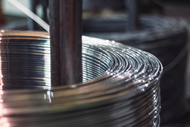
All About Triplex Wire
17th Jul 2026
If you see wires installed aerially from the power grid to a home or business, there’s a good chance you’ve seen triplex wire (or quadruplex wire) before. Here’s what you need to know about this specialized type of electrical wire.
What Is Aluminum Triplex Wire Used for?
Aluminum triplex wire consists of two hot leads (or legs) that are wrapped around each other and which are typically insulated. It also has a third neutral leg that is usually uninsulated.
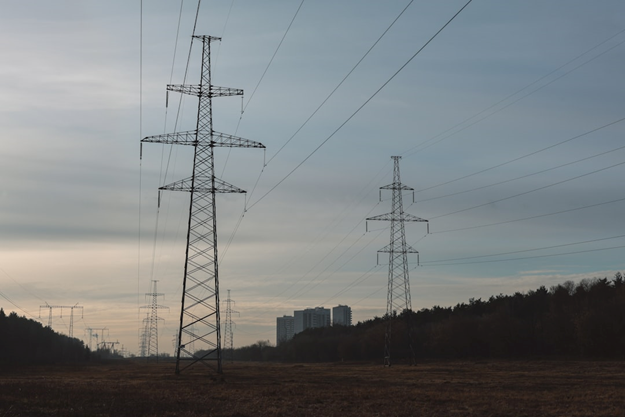
Triplex wire is used for power distribution to homes and businesses, and is often installed aerially. The third neutral leg sometimes contains a steel cross member that helps prevent the wire from sagging under the influence of gravity, or due to wind, snow or ice loading.
Is All Triplex Wire Installed Aerially?
Triplex wire is commonly installed aerially, which is one of the reasons that aluminum is typically used to make it (more on that in a moment) but it can also be installed underground for power service entry.
However, whenever any cables are used for direct burial must be appropriately rated for that application.
Why Is Aluminum Used in Triplex Wire?
There are numerous reasons that triplex wire, like quadruplex wire, is commonly made from aluminum. Some of the most common of these are as follows.
- Low weight. Aluminum is significantly lighter than copper, which not only lowers the costs associated with logistics and transportation, but which makes it easier to handle. Because of its low weight aluminum is also more suitable for overhead installation because it will not place as much stress on supports as much heavier copper cables would.
- Flexibility, ductility and malleability: Copper is a very flexible material which makes it relatively easy to work with as an electrical conductor. Aluminum preserves most of those attributes which makes it suitable as well. It is flexible, malleable and ductile, and depending on the alloy, it is usually softer than copper as well. The one note here is that copper has a higher tensile strength and can usually withstand more stress cycles before fatiguing than aluminum can.
- Conductivity to weight ratio: Strictly speaking, copper has better conductivity than aluminum, but when you add in more details, the situation shifts somewhat. If you factor in for weight, aluminum actually offers better conductivity than copper, which gives it an advantage in some situations.
- Corrosion resistance: Both copper and aluminum are subject to the ravages of corrosion, but the good thing about aluminum is that it very rapidly forms a hard, dense aluminum oxide layer on its surface when it is exposed to air. As a result, aluminum conductors can often be used outside with no insulation. You see this sometimes in high-voltage overhead transmission wires, which are often bare aluminum. This corrosion resistance gives aluminum a slight advantage over copper in some installations.
- Recyclability: One other selling point of aluminum is that it is 100% recyclable, which can impact its life cycle as an electrical conductor as well as influence the choice to use it in the first place.
- Low cost: We saved the most impactful consideration for last, and the low cost is far and away the main reason that aluminum is sometimes chosen as an electrical conductor, and not just for use in manufacturing quadruplex and triplex wire. The cost of copper has skyrocketed in recent years, and it would be massively cost prohibitive to use copper to make quadruplex and triplex wire for power transmission. Keeping the cost of electrical infrastructure down in turn keeps down the cost of construction, which has tempered expenses. Also, it is more cost-effective to transport aluminum wire, as stated, because it is so much lighter.
What’s the Difference Between Quadruplex and Triplex Wire?
Physically, triplex wire has two hot leads and one neutral leg, as indicated, whereas quadruplex wire has three hot legs and one neutral leg which as in triplex wire may also be supported by a steel member. Triplex wire is typically used for single phase power distribution whereas quadruplex wire can be used for three phase power distribution.
Also, triplex wire typically handles lower amperage, between 25 and 200 amps, whereas quadruplex wire is sometimes rated to handle higher ratings, up to 400 amps. Of course this is a generalization and ultimately is subject to the ratings of the wire in question.
Explore Triplex Wire Here
Want to learn more about our triplex wire, quadruplex wire, or any of the other aluminum wire that we sell? Check it out on our website and if you have any questions before you buy get in touch with us and we would be more than happy to help.
Also, bookmark our page if you are in the market for a new electrical wire supplier. We carry many different types of specialty electrical wire and cable manufactured to high standards of quality.