

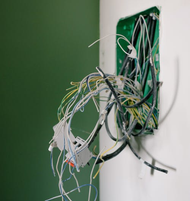
Interesting Electrical Conductor Information from an Electrical Wire Supplier
22nd Jan 2026
The world of electrical conductors is a dense one, especially for those that have never so much as picked up a wire stripper. Fortunately we have years of experience as an electrical wire supplier and know a thing or two. Test your knowledge here and see if you learn anything.
Electrical Wire and Cable Are Not the Same
Electrical wire and cable are not the same even though they are often referenced interchangeably. Electrical wire consists of one or several conductors that are insulated but which do not have a common jacket. Cables are individually insulated and carried together under a common insulative jacket.
Copper Is Not Always the Best Conductor
Copper is often touted as the premier conductor, and it does offer a higher overall conductivity than aluminum. It is also true that copper is stronger than aluminum, and has a higher tensile strength. Even so, aluminum wire actually has a higher conductivity-to-weight ratio than copper and it is much lighter, making it easier to work with, transport and install. On top of that, aluminum is considerably more affordable than copper.
Not All Battery Wire Is Created Equal
Battery wire is generally intended to be used as leads for battery installations. However, there are several different types of battery wire, including automotive and marine battery wire. Both are highly flexible and made with many finely stranded conductors, but marine battery wire features conductors that are individually tinned, which makes them more corrosion resistant in marine environments, even if the outer jacket is compromised.
Stranded and Solid Wire Offer Unique Performance Attributes
There are both single-stranded, solid wire conductors and many-stranded conductors, each of which offers its own unique benefits to the installation in question. Single stranded wires have a higher current-carrying capacity, holding all else equal, but they are stiffer, more difficult to bend, and more likely to break if they are bent several times. Multi-stranded conductors, by contrast, are much more flexible, making them easier to handle and install, and giving them much better overall durability in situations in which they will be repeatedly stressed.
Cable Armor Does Not Necessarily Protect the Conductor Against Moisture
Some industrial electrical cable is armored with interlocking metal rings to protect it against physical trauma such as being crushed. However, the armor alone does not guarantee that the cable within will be expressly protected against other chemical and environmental stressors, specifically moisture.
Given that moisture intrusion is a significant concern that impacts electrical infrastructure, it is necessary to ensure familiarity with the specifications of the cable in question before proceeding with an installation, as even if a cable is armored it may not be protected against moisture.
Electrical Wire and Cable Are Commonly Color Coded
If you have ever looked at loose electrical wire or cable, you may have noticed that the insulation varies considerably in color. This is no coincidence and electrical wire and cable are often installed with particular attention to the insulation color used.
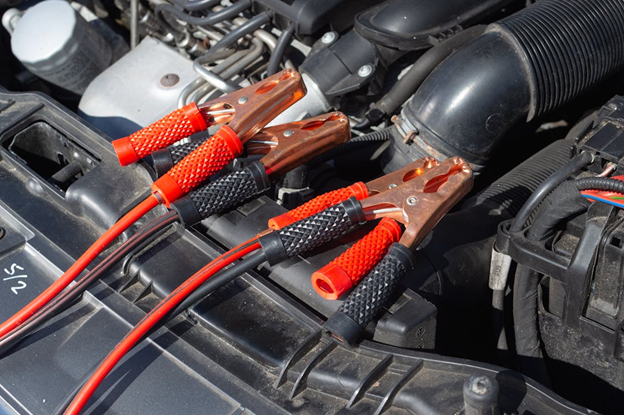
For instance, in general building applications, a black wire typically indicates a hot (live) wire in outlets and switches, and a red wire typically indicates a hot wire in a switch leg or in a smoke detector system. White wires usually indicate a neutral lead. These carry power back to the source. Battery cable is also color coded; the negative lead is black and the positive lead is red.
In addition, there are bare copper wires that are also used for specific applications, most commonly as a ground wire, even though they lack insulation.
For more information on the significance of electrical wire and color, see our previous post, What Do Electrical Wire Colors Mean?
There Are Several Types of Building Wire
While building wire is generally suited to applications in residences, there is more than one type. Some common classes of building wire are:
- THHN Wire: This is an affordable electrical wire that is nylon coated and which resists high heat making it generally useful in building applications.
- THWN Wire: This is effectively the same as THHN wire with the addition that it is suitable for use in wet environments.
- TFFN Wire: This is a nylon-coated building wire that is extra flexible and therefore suitable for wiring fixtures.
Not All Insulation Is Created Equal
Just as there are many different types of specialty and building wire, there are many different types of electrical insulation. Some of the more common types of electrical wire insulation are:
- Nylon
- PVC
- Polyethylene
- Neoprene
- Polyurethane
- EPDM
These are only a few of the many types of electrical wire insulation. For more information, see our previous post, About Electrical Wire Insulation: 14 Types, Explained.
Bookmark EWCS Wire As Your Preferred Electrical Wire Supplier
Hopefully you learned a thing or two about electrical wire and cable in this short post. If you found it informative, bookmark our page and if you ever need the help of an electrical wire supplier with years of experience, get in touch with us directly to learn more.